What is Scoliosis?
Scoliosis is a spinal deformity that causes an abnormal sideways curve of the spine, often in the shape of an S or C.
What are the common types of scoliosis?
- Idiopathic Scoliosis: This is the most common type of scoliosis, and it is the type that experts don’t know the cause of (“idiopathic” means “from an unknown cause”). In most cases, idiopathic scoliosis happens around puberty, typically during a growth spurt. Some common misconceptions about idiopathic scoliosis is that it is caused by carrying a heavy backpack, having bad posture when you write, or playing sports. All of these are just myths, you do NOT have control over whether you get scoliosis or not.
- Congenital scoliosis: This type of scoliosis happens when something goes wrong with the way a vertebrae is developed when a baby is still in the womb. However, this problem may not be noticed until the child goes through a growth spurt, either around age 2 or ages 8-13.
- Scoliosis originating from a medical condition: Some people may develop scoliosis due to a long-term medical issue that affects their muscles or skeletal system. For example, people with muscular dystrophy, cerebral palsy, or osteogenesis imperfecta may get scoliosis. Those who have tumors or growths on their spine may also develop scoliosis.
What are the signs and symptoms of scoliosis?
Sometimes scoliosis may be easy to see: uneven shoulders as the spine is curved in a certain direction. Or, if one’s spine is twisted due to scoliosis, when they bend over one side of their ribcage might stick out more than the other.
How is the severity of scoliosis curved defined?
- A mild curve is less than 20 degrees.
- A moderate curve is between 25 degrees and 40 degrees.
- A severe curve is more than 40 degrees.
(note that different sources may provide a different degree range for the severity of a curve)
How is scoliosis treated?
- Mild curve: In most cases, mild scoliosis curves don’t need treatment. If you have a mild curve, you’ll likely go for regular check-ups to monitor if your curvature increases. Scoliosis is more likely to get worse while a person’s bones are developing, so as you grow, your doctor will monitor your spinal curvature.
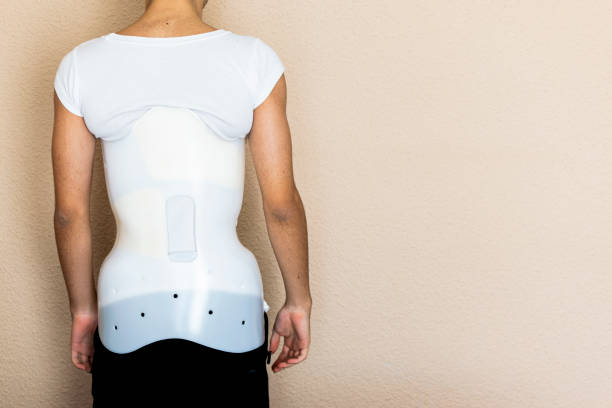
- Moderate curve: If your doctor thinks your curve might get worse or cause problems, they will likely ask you to wear a back brace until you finished growing. As every person’s spinal curvature is different, they will be asked by their doctor to wear their back brace for a different amount of time each day (usually it will be the majority of the day). If the brace does its job, your curvature will not increase.
- Severe curve: People with severe scoliosis often need to undergo a spinal fusion surgery. During this operation, an orthopedic surgeon straightens the spine as much as possible and holds it in place with rods and screws. The surgeon then puts in a bone graft to fuse some of the vertebrae together, that way the curve cannot get any worse. After about a year, the bones should be fully fused. Although the metal rods are no longer needed at this point, they stay in the spine as they are not doing any harm and taking them out requires another operation.
What are some other sources that provide an overview about scoliosis?
These are some websites that I referenced for this post as I believe they do a great job at explaining scoliosis:
Check Out Some of Our Scoliosis-Related Blogs:


Subscribe
Enter your email below to receive updates.
 The Spine Saga